Görselliğin İktidar Olma Sürecinde Sosyal Medyanın Rolü: Instagram Üzerine Bir Araştırma
Özet
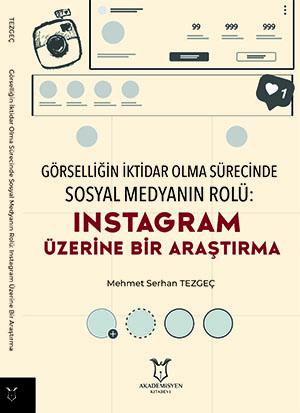
"Görselliğin İktidar Olma Sürecinde Sosyal Medyanın Rolü: Instagram Üzerine Bir Araştırma" başlıklı bu eser, dijitalleşme ve yakınsama kültürü ekseninde görselliğin toplumsal iletişimdeki dönüşümünü ve Instagram’ın bu süreçteki rolünü incelemektedir. Çalışma, Kodak döneminden günümüze analog fotoğraftan akıllı telefon ve mobil teknolojilere geçişle birlikte fotoğrafların ailevi anıları saklama işlevinden sıyrılıp bireysel ve eş zamanlı bir görsel iletişim aracına dönüştüğünü ortaya koymaktadır. Instagram; görsel üretme, filtrelerle düzenleme, konum etiketleme, hikâyeler vasıtasıyla geçici paylaşımlar yapma ve gündelik sıradan anları estetize ederek sunma özellikleriyle saf bir görsel popüler kültür aygıtı olarak konumlandırılmaktadır. Eserin ampirik bölümünde, Türkiye’deki 437 aktif Instagram kullanıcısı üzerinde "Instagram ve Görsellik Ölçeği" uygulanarak Yakınsama Kültürü, İletişim ve Paylaşımların Takibi alt boyutlarında nicel bir araştırma gerçekleştirilmiştir. Saha araştırması bulgularına göre kullanıcıların %98,2’si platforma akıllı telefonla bağlanmakta, %60,6’sı günde 1-3 saat harcamakta ve mecrayı öncelikle eğlence, dijital albüm oluşturma ve kişilerarası görsel iletişim amacıyla kullanmaktadır. Ayrıca 18-25 yaş grubundaki kullanıcıların tüm boyutlarda en yüksek puanlara sahip olduğu saptanmıştır. Eser, sosyal medyadaki görsel iktidarı hem kuramsal temellerle hem de ampirik verilerle bütüncül bir biçimde analiz ederek kitap tanıtım platformları ve iletişim araştırmacıları için değerli bir kaynak sunmaktadır.
This work, titled "The Role of Social Media in the Process of Visual Dominance: A Research on Instagram," examines the transformation of visuality in social communication within the framework of digitalization and convergence culture, as well as Instagram's role in this process. The study reveals that with the transition from analog photography to smartphones and mobile technologies since the Kodak era, photographs have evolved from family memory-preservation tools into individual, real-time visual communication media. Instagram is positioned as a pure visual popular culture apparatus through its capabilities of image creation, filter editing, location tagging, ephemeral sharing via stories, and the aesthetic presentation of everyday banal moments. In the empirical section of the work, a quantitative study was conducted on 437 active Instagram users in Turkey using the "Instagram and Visuality Scale" across three sub-dimensions: Convergence Culture, Communication, and Following Posts. Field research findings demonstrate that 98.2% of users access the platform via smartphones, 60.6% spend 1–3 hours daily, and primarily utilize the medium for entertainment, digital archiving, and interpersonal visual communication. Furthermore, users in the 18–25 age group recorded the highest scores across all dimensions. By comprehensively analyzing visual dominance in social media through both theoretical foundations and empirical data, this work offers a valuable resource suitable for book promotion platforms and communication researchers.
Referanslar
Abbate, J. (2007) “İnternetin Popülerleşmesi”, David Crowley ve Paul Heyer (Ed.) İletişim Tarihi içinde. Ankara: Phoenix Yayınları.
Adete (2022) “113 Instagram Statistics You Cannot Miss in 2022” https://invideo.io/blog/instagram- statistics/#instagram-post-statistics. Erişim Tarihi: 01.07.2022
Anderson, K. E. (2015). Getting acquainted with social networks and apps: Snapchat and the rise of ephemeral communication. Library Hi Tech News.
Assman, J. (2018). Kültürel Bellek: Eski kültürlerde yazı, hatırlama ve politik kimlik. Tekin, A. (çev.) İstanbul: Ayrıntı Yayınları.
Atay, T (2017). Görünüyorum O Halde Varım. İstanbul: Can Yayınları.
Bainotti, L., Caliandro, A., & Gandini, A. (2021). From archive cultures to ephemeral content, and back: Studying Instagram Stories with digital methods. new media & society, 23(12), 3656-3676.
Baker, U. (2016). Beyin ekran. İstanbul: İletişim Yayınları.
Baker, U. (2018). Kanaatlerden İmajlara. Çev. Harun Abuşoğlu, Birikim Yayınları, İstanbul.
Bal, M. (2003). Visual essentialism and the object of visual culture. Journal of Visual culture, 2(1), 5- 32.
Bal, M. (2005). The commitment to look. Journal of Visual Culture, 4(2), 145-162.
Balbi ve Magaudda (2018). A History of Digital Media. An Intermedia and Global Perspective. London: Routledge.
Balcı, Ş. (2001). Sosyal Bilimlerde Araştırma: Yöntem, Teknik ve İlkeler, Ankara, Pegem Yayınları.
Balta Peltekoğlu, F. (2012). “Sosyal Medya Sosyal Değişim”, Tolga Kara ve Ebru Özgen (Ed.) Sosyal Medya Akademi içinde. İstanbul: Beta Basım.
Barnard, M. (2010). Sanat, tasarım ve görsel kültür. Ankara: Ütopya Yayınevi.
Barthes, R. (2016) Camera Lucida: Fotoğraf Üzerine Düşünceler. Akçakaya, R.(çev.). İstanbul: Altıkırkbeş Yayınları.
Bayer, J. B., Ellison, N. B., Schoenebeck, S. Y., & Falk, E. B. (2016). Sharing the small moments: ephemeral social interaction on Snapchat. Information, Communication & Society, 19(7), 956-977.
Baudrillard, J. (2014). Simulakrlar ve Simülasyon. Adanır, O. (çev.) Ankara: Doğu Batı Yayınları.
Becker, K. (2004). Where is visual culture in contemporary theories of media and communication?
Nordicom Review, 25(1-2), 149-157.
Becker, K. (2016). Variance in everyday photography. In Digital Photography and Everyday Life (pp. 98-104): Routledge.
Benjamin, W. (2011). Fotoğrafın Kısa Tarihi. İstanbul: Agora Kitaplığı.
Benjamin, W. (2014). Son Bakışta Aşk. İstanbul: Metis Yayınları
Berger, J. (2017). Bir Fotoğrafı Anlamak. İstanbul: Metis Yayınları.
Boehm, G., & Mitchell, W. J. (2009). Pictorial versus iconic turn: Two letters.
Boyd, D. M., & Ellison, N. B. (2007). Social network sites: Definition, history, and scholarship. Journal of computer‐mediated Communication, 13(1), 210-230.
Bozkurt, G. (2015). İnsan ve Kültür. İstanbul: Boyut Yayınları.
Blystone,D. (2022). What is Instagram and why was itsuccessful?. https://www.investopedia.com/articles/investing/102615/story-instagram-rise-1-photo0sharing- app.asp#:~:text=Instagramisaphotoand,appwaslaunchedonOct. Erişim Tarihi: 01.08.2022.
Briggs, A., ve P. Burke. (2004). Medyanın Toplumsal Tarihi: Gutenberg’ten İnternete. Ü. H. Soysal ve E. Uzun (çev.), İstanbul: Kırmızı Yayınları.
Brook, I. (2002). Experiencing Interiors: Ocularcentrism and Merleau-Ponty's Redeeming of the Role of Vision. Journal of the British Society for Phenomenology, 33(1), 68-77. doi:10.1080/00071773.2002.11007361.
Brown, T. A. (2006). Confirmatory Factor Analysis for Applied Research. (First Edition). NY: Guilford Publications, Inc.
Burnett, R. (2007). İmgeler nasıl düşünür. Pusar, G. (çev.). İstanbul: Metis Yayınları.
Bryson, M. (1988) The gaze in the expanded field. Vision and Visuality ( Ed. H. Foster) Seattle, WA: Bay View Press/Dia Art Foundation içerisinde 91-94
Cardell, K., Douglas, K., & iphone E. (2017). Social media and ephemeral narratives as memoir. Mediating Memory: Tracing the Limits of Memoir (2017), 157-172.
Castells, M. (2005). Enformasyon Çağı; Ekonomi, Toplum ve Kültür: Ağ Toplumunun Yükselişi (Cilt I). E. Kılıç (çev.), İstanbul: İstanbul Bilgi Üniversitesi Yayınları.
Chmielecki, K. (2015). From visual culture to visual communication. The pictorial and iconic turn in contemporary culture. Art Inquiry(17), 93-114.
Choi, T. R., & Sung, Y. (2018). Instagram versus Snapchat: Self-expression and privacy concern on social media. Telematics and informatics, 35(8), 2289-2298.
Chopra-Gant, M. (2016). Pictures or it Didn’t happen: Photo-nostalgia, iPhoneography and the representation of everyday life. Photography and Culture, 9(2), 121-133.
Comrey, A. L., & Lee, H. B. (1992). A first course in factor analysis (2nd ed.). Hillsdale, NJ: Erlbaum.
Connor, S. (2015). Postmodern Kültür: Çağdaş olanın kuramına bir giriş. Şahiner, D. (çev.) İstanbul: Yapı Kredi Yayınları.
Crano, R. (2019). The real terror of Instagram: Death and disindividuation in the social media scopic field. Convergence, 25(5-6), 1123-1139.
Crary, J. (2019). Gözlemcinin Teknikleri. Daldeniz, E. (çev.), İstanbul: Metis Yayınları.
Cruz, E. G., & Lehmuskallio, A. (Eds.). (2016). Digital photography and everyday life: Empirical studies on material visual practices. Routledge.
Curtis, N. (2009). ‘As if’: Situating the Pictorial Turn. Culture, Theory & Critique, 50(2-3), 95-101. Çakır, M. (2004). Görsel Kültür ve Küresel Kütle Kültürü. Ankara: Ütopya Yayınevi.
David, G. (2021). Mobile Images. In The Palgrave Handbook of Image Studies (pp. 609-622): Springer.
Davis, W. (2004). Visuality and pictoriality. RES: Anthropology and Aesthetics, 46(1), 9-31. Daston, L., & Galison, P. (1992). The image of objectivity. Representations, 40, 81-128.
Debord, G. (2016). Gösteri Toplumu. İstanbul: Ayrıntı Yayınları.
Değirmenci, K. (2016). Fotoğrafın İmgeleri: Temsil, Gerçeklik ve Dijital Çağda Fotoğraf. İstanbul: Doğu Kitabevi.
Dikovitskaya, M. (2001). From Art History to Visual Culture. Yayınlanmamış Doktora Tezi. New York: Columbia University.
Duncum, P. (2001). Visual culture: Developments, definitions, and directions for art education. Studies in art education, 42(2), 101-112.
Duncum, P. (2004). Visual culture isn't just visual: Multiliteracy, multimodality and meaning. Studies in art education, 45(3), 252-264.
Eagleton, T. (2016). Kültür Yorumları. İstanbul: Ayrıntı Yayınları.
Eisentein, E. L. (1979). The printing press as an agent of change (Cilt I-II). Cambridge: Cambridge University Press.
Elkins, J. (2003). Visual studies: A skeptical introduction. Psychology Press.
Ellul, J. (2017). Sözün gözden düşüşü. Çev. E. Ercan. Bursa: Sentez Yayıncılık. Erdoğan, İ. (2002). İletişimi Anlamak. Ankara: Erk Yayıncılık.
Featherstone, M. (2007). Consumer culture and postmodernism. Sage Publications.
Fink, A. (2017). How To Conduct Surveys. AStep-by-Step Guide. 6. Edition. SAGE Publications. Foster, H. (1988) Vision and Visuality. Seattle, WA: Bay View Press/Dia Art Foundation.
Freedman, K. (2003). Teaching visual culture: Curriculum, aesthetics, and the social life of art: Teachers. College Press.
Freund, G. (1980). Photography & society. David R Godine Pub.
Frosh, P. (2003). The image factory: Consumer culture, photography and the visual content industry:
Berg Publishers.
Fyfe, G., & Law, J. (1987). Introduction: On the Invisibility of the Visual. The Sociological Review, 35(1_suppl), 1–14.
Gans, H. (2012). Popüler Kültür ve Yüksek Kültür. İncirlioğlu, E.O. (çev.). İstanbul: Yapı Kredi Yayınları.
Gazzaley ve Rosen (2019). Dağınık Zihin, Yüksek Teknoloji Dünyasında Kadim Beyinler. İstanbul: Metis Yayınları.
Gibbs, M., Meese, J., Arnold, M., Nansen, B., & Carter, M. (2015). # Funeral and Instagram: Death, social media, and platform vernacular. Information, Communication & Society, 18(3), 255-268.
Gierstberg, F. ve W. Oosterbaan. (2002) The Image Society: Essays on Visual Culture. Rotterdam: Nederlands Foto Instituut.
Goody, J. (2013). Yazılı ve Sözel Arasındaki Etkileşim. Osman Bulut (Çev.). İstanbul: Pinhan Yayıncılık, 2013.
Gómez Cruz, E., & Meyer, E. T. (2012). Creation and control in the photographic process: iPhones and the emerging fifth moment of photography. Photographies, 5(2), 203-221.
Göktürk, A. (2002). Sözün ötesi: deneme: Yapı Kredi Kültür Sanat Yayıncılık Ticaret ve Sanayi AŞ. Green, L. (2010). The internet: an introduction to new media. Berg.
Gye, L. (2007). Picture this: The impact of mobile camera phones on personal photographic practices. Continuum, 21(2), 279-288.
Hall, S. (1997) `Introduction', in S. Hall (ed.), Representation: Cultural Representations and Signifying Practices. London: Sage, 1-12.
Hall, S. (2021). Writings on Media: History of the Present. Duke University Press. Han, B. C. (2019). Şeffaflık Toplumu. Haluk Barışcan (çev.). İstanbul: Metis Yayınları.
Hand, M. (2012). Ubiquitous photography. Polity.
Hand, M. (2017). Visuality in social media: Researching images, circulations and practices. The SAGE handbook of social media research methods, 217-231.
Hand, M. (2020). Photography Meets Social Media: Image Making and Sharing in a Continually Networked Present. In The Handbook of Photography Studies (pp. 310-326): Routledge.
Hansen, M. B. N. (2004). New philosophy for new media: MIT press.
Harrison, B. (2002). Photographic visions and narrative inquiry. Narrative inquiry, 12(1), 87-111. Harrison, D. (2020). The history of Instagram. https://izood.net/blog/the-history-of-instagram/ Erişim Tarihi: 09.06.2022.
Harvey, D. (1991). The Condition of Postmodernity. Oxford: Basil Blackwell.
Heidegger, M. (1977). The question concerning technology. New York, 214.
Hooper, D., Coughlan, J. and Mullen, M. (2008). Structural equation modeling: Guidelines for determining model fit. The Electronic Journal of Business Research Methods. 6 (1), 53–60.
Horkheimer, M. ve Adorno, T.W. (2014). Aydınlanmanın Diyalektiği. Ankara: Kabalcı Yayınevi.
Hu, L., Bentler, P. M. (1995). Evaluating Model Fit. In R. . Hoyle (Ed.), Structural equation modeling: concepts, issues and applications. London: Sage Publications.
Innis, A. H. (2006). İmparatorluk ve İletişim Araçları. Törenli, N. (çev.). Ankara: Ütopya Yayınevi.
Jöreskog, K. G. ve Sörbom, D. (1993). LISREL 8: Structural Eguation Modeling with the Simplis Command Language. USA: Scientific Software ınternational, Inc.
Jay, M. (1988). The rise of hermeneutics and the crisis of ocularcentrism. Poetics Today, 9(2), 307- 326.
Jay, M. (1993). Downcast eyes: The denigration of vision in twentieth-century French thought: Univ of California Press.
Jay, M. (1996). Vision in context: reflections and refractions. Vision in context: Historical and contemporary perspectives on sight, 1-14.
Jay, M. (2002). Cultural relativism and the visual turn. Journal of Visual culture, 1(3), 267-278.
Jay, M. (2002a). Returning the gaze: The American response to the French critique of ocularcentrism: Routledge.
Jenkins, H. (2019). Cesur Yeni Medya Teknolojiler ve Hayran Kültürü. İstanbul: İletişim Yayınları. Jenks, C. (Ed.). (2002). Visual culture. Routledge.
Joyce (2021). “Most Liked Picture in Instagram” https://www.brandwatch.com/blog/most-liked- pictures-on-instagram/ Erişim Tarihi: 13.06.2022.
Jones, A. (2013). Seeing differently: A history and theory of identification and the visual arts: Routledge.
Jurgenson, N. (2019). The social photo: On photography and social media: Verso Books. Kara, Tolga (2013). Sosyal Medya Endüstrisi. İstanbul: Beta Yayınları.
Karaçelik, Y. (2019). Görsel Kültür ve Fotoğrafın İzinde Instagram. Istanbul: Notabene Yayınları.
Karamolla, M. ve Yılmaz, N. K. (2020). Adorno ve Horkheimer’in Araçsal Akıl Eleştirisi1. Journal of History School (JOHS).
Karasar, N. (2015). Bilimsel Araştırma Yöntemi. Ankara: Nobel Yayıncılık.
Katz, J. E., & Crocker, E. T. (2015). Selfies| selfies and photo messaging as visual conversation: Reports from the United States, United Kingdom and China. International Journal of Communication, 9, 12.
Keller, U. (2007). “Fotoğraf Haberciliğinin İlk Zamanları”, David Crowley ve Paul Heyer (Ed.) İletişim Tarihi içinde. Ankara: Phoenix Yayınları.
Kelloway, K. E. (1989). Using Lisrel for Structural Equation Modeling: A Researcher’s Guide. London: Sage.
Kerslake, L., & Wegerif, R. (2017). The Semiotics of Emoji: the Rise of Visual Language in the Age of the Internet (book review). Media and Communication, 5(4), 75-78.
Koskinen, I. (2007). Managing banality in mobile multimedia. The social construction and usage of communication technologies: Asian and European experiences, 60-81.
Kovarik, B. (2015). Revolutions in communication: Media history from Gutenberg to the digital age: Bloomsbury Publishing USA.
Köse, H. (2014). Şovenist İnşa. İstanbul: Ayrıntı Yayınları.
Lasén, A., & Gómez-Cruz, E. (2009). Digital photography and picture sharing: Redefining the public/private divide. Knowledge, Technology & Policy, 22(3), 205-215.
Leech, N. L., Barrett, K. C., & Morgan G. A. (2005). SPSS for intermediate statistics: use and interpretation (2nd ed.). London, Erlbaum.
P. Virno ve M. Hardt (derl.). Minneapolis ve London: University of Minnesota Press.
Lazzarato, M. (1996). “Immaterial Labor”, Radical Thought in Italy: A Potential Politics. P. Virno ve
M. Hardt (derl.). Minneapolis ve London: University of Minnesota Press.
Lazzarato M (2014) Signs and Machines: Capitalism and the Production of Subjectivity. Jordan JD (Trans.). Los Angeles: Semiotext.
Leaver, T., Highfield, T., & Abidin, C. (2020). Instagram: Visual social media cultures: John Wiley & Sons.
Lee, E., Lee, J.-A., Moon, J. H., & Sung, Y. (2015). Pictures speak louder than words: Motivations for using Instagram. Cyberpsychology, behavior, and social networking, 18(9), 552-556.
Lenoir, T. (2004). New philosophy for new media. (Hansen, B.) (ed.) MIT press. Levin, D. M. (Ed.). (1993). Modernity and the Hegemony of Vision. California Press.
Lewis, J. W., & Parry, K. (2021). Introduction: Ubiquity Has a History. Photography’s Multitudes, 7.
Lister, M. (2007). A Sack in the Sand: Photography in the Age of Information. Convergence, 13(3), 251-274.
Lister, M. (2013). The photographic image in digital culture: Routledge. Maigret, E. (2019). Medya ve iletişim sosyolojisi. İstanbul: İletişim Yayınları
Manovich, L. (1995). The paradoxes of digital photography. Photography after photography, 57-65. Manovich, L. (2002). The language of new media. MIT Press.
Manovich, L. (2014). Software is the Message. Journal of Visual culture, 13(1), 79-81. Manovich, L. (2017). Instagram and contemporary image. Nova Iorque: CUNY.
Marwick, A. E. (2015). Instafame: Luxury selfies in the attention economy. Public culture, 27(1 (75)), 137-160.
McLahlan, S. (2022). “35 Instagram Stats that Matter to Marketers in 2022”
https://blog.hootsuite.com/instagram-statistics/ Erişim Tarihi: 30.06.2022.
McLuhan, M. (2001). Gutenberg Galaksisi: Tipografik İnsanın Oluşumu (Cilt I). G. Ç Mirzoeff N. (1999). An introduction to visual culture. London: Rourledge.
Mirzoeff, N. (2008). Visual culture, everyday life, difference, and visual literacy. In Visual Culture Studies (pp. 17-32): SAGE Publications Inc.
Mirzoeff, N. (2016). How to see the world: an introduction to images, from self-portraits to selfies, maps to movies, and more: Hachette UK.
Mitchell, W. J. (1994). The reconfigured eye: Visual truth in the post-photographic era. Mit Press.
Mitchell, W. T. (1995). Picture theory: Essays on verbal and visual representation: University of Chicago Press.
Mitchell, W. J. (2002). Showing seeing: a critique of visual culture. Journal of Visual culture, 1(2), 165-181.
Mitchell, W.T. (2005). İkonoloji -İmaj, Metin, İdeoloji-. İstanbul: Paradigma Yayınları. Mitchell, W. J. (2005a). There are no visual media. Journal of visual culture, 4(2), 257-266.
Mizan, S., & de Mello Ferraz, D. (2019). The Postmodern Turn in Prosuming Images: Juxtaposition, Dialogism, and the Supplement in Contemporary Visual Culture. Revista X, 14(5), 126-150.
Moxey, K. (2008). Visual studies and the iconic turn. Journal of Visual culture, 7(2), 131-146. Mumford, L. (1963). Technics and civilization. New York : Harcourt, Brace & World.
Murray, S. (2008). Digital images, photo-sharing, and our shifting notions of everyday aesthetics.
Journal of Visual culture, 7(2), 147-163.
Nakamura, L. (2007). Digitizing race: Visual cultures of the Internet (Vol. 23). U of Minnesota Press. Neuman, L. W. (2006). Social research methods, 6/E. Pearson Education India.
Ong, W. (2014). Sözlü ve Yazılı Kültür. İstanbul: Metis Yayınları.
Papacharissi, Z. (2010). A networked self: Identity, community, and culture on social network sites: Routledge.
Pereyra, M. (1999). From homo sapiens to homo videns,„. College and University Dialogue, 3.
Peter, H. (1999). Interpersonal communication. In: Routledge. Pink, S. (2013). Doing visual ethnography: Sage Publications.
Poe, M.T. (2019). İletişim Tarihi Konuşmanın Evriminden İnternete Medya ve Toplum. İstanbul: Islık Yayınları.
Postman, N. (2016). Televizyon: Öldüren Eğlence. Akınhay, O. (çev.). İstanbul: Ayrıntı Yayınları.
Rampley, M. (2005). Visual culture and the meanings of culture. id.,(ed.), Exploring Visual Culture: Definitions, Concepts, Contexts, Edinburgh: Univ. of Edinburgh Pr.
Robert, L. (2007) “Yazı ve Alfabe Etkisi”, David Crowley ve Paul Heyer (Ed.) İletişim Tarihi içinde. Ankara: Phoenix Yayınları.
Robins, K. (2013). İmaj: görmenin kültür ve politikası. İstanbul: Ayrıntı Yayınları.
Rogoff, Irit (2002) Studying Visual Culture. In Nicholas Mirzoeff (ed.) The Visual Culture. Psychology Press.
Rojek, C. (2003). Şöhret. İstanbul: Ayrıntı Yayınları.
Rose, G. (2016). Visual methodologies: An introduction to researching with visual materials: sage.
Rubinstein, D., & Sluis, K. (2008). A life more photographic: Mapping the networked image. Photographies, 1(1), 9-28.
Russmann, U., & Svensson, J. (2017). Introduction to visual communication in the age of social media: Conceptual, theoretical and methodological challenges. Media and Communication, 5(4), 1-5.
Sanders, B. (1999). Öküzün A’sı Elektronik Çağda Yazılı Kültürün Çöküşü ve Şiddetin Yükselişi. (çev. Tahir, Ş.). İstanbul: Ayrıntı Yayınları.
Sandywell, B., & Heywood, I. (2012). Critical approaches to the study of visual culture: an introduction to the Handbook. The handbook of visual culture, 1-56.
Sartori, G. (2006). Görmenin İktidarı: Gören İnsan. Çev: Gül Batuş ve Bahar Ulukan Şentürk). İstanbul: Karakutu Yayınları.
Sarvas, R., & Frohlich, D. M. (2011). From snapshots to social media: The changing picture of domestic photography: Springer.
Schreiber, M. (2017a). Audiences, aesthetics and affordances analysing practices of visual communication on social media. Digital Culture & Society, 3(2), 143-164.
Schreiber, M. (2017). Showing/sharing: Analysing visual communication from a praxeological perspective. Media and Communication, 5(4), 37-50.
Serafinelli, E. (2017). Analysis of photo sharing and visual social relationships: Instagram as a case study. Photographies, 10(1), 91-111.
Serafinelli, E. (2018). Digital life on Instagram: New social communication of photography: Emerald Group Publishing.
Serafinelli, E., & Cox, A. (2019). ‘Privacy does not interest me’. A comparative analysis of photo sharing on Instagram and Blipfoto. Visual Studies, 34(1), 67-78.
Sheller, M., & Urry, J. (2006). The new mobilities paradigm. Environment and planning A, 38(2), 207-226.
Sloan, L., & Quan-Haase, A. (2017). The SAGE handbook of social media research methods: Sage. Smith, M. (2008). Visual culture studies: interviews with key thinkers: Sage.
Sontag, S. (2008). Fotoğraf Üzerine. Akınhay, O. (çev.). İstanbul: Agora Kitaplığı.
Statista (2022). Distribution of Instagram users worldwide as of April 2022, by age group. https://www.statista.com/statistics/325587/instagram-global-age-group/. Erişim Tarihi: 15.05.2022.
Stevenson, N. (2015). Medya Kültürleri: Sosyal Teori ve Kitle İletişimi. (çev. Orhon, G. ve Aksoy, B.E.). Ankara: Ütopya Yayınevi.
Strauss, L. (1984). Yaban Düşünce. (çev. Yücel, T.) İstanbul: Hürriyet Vakfı Yayınları. Strauss, L. (2013) Mit ve Anlam (çev. Demir, G.Y.) İstanbul: İthaki Yayınları.
Sturken, M., & Cartwright, L. (2017). Practices of looking. Oxford: Oxford University Press.
Sümer, N. (2000). Yapısal Eşitlik Modelleri. Türk Psikoloji Yazıları, 3 (6), 49-74.
Tabachnick B. G. and Fidel, L. S. (2001). Using Multivariate Statistics. (Fourth Edition). MA: Allyn & Bacon, Inc.
Taburoğlu, Ö. (2013). Resim söz ve yazı: imge yaratmanın ve bozmanın yolları: Doğu Batı Yayıları. Timisi, N. (2003). Yeni İletişim Teknolojileri ve Demokrasi. Ankara: Dost Kitabevi.
Thomson, T. (2021). Exploring the Life Cycle of Smartphone Images from Camera Rolls to Social Media Platforms. Visual Communication Quarterly, 28(1), 19-33.
Thompson, B. (2004). Exploratory and Confirmatory Factor Analysis: Understanding Concepts and Applications. (First Edition). Washington: American Psychological Association.
Thompson, T.P. (2008). Medya ve Modernite. Öztürk, S. (çev). İstanbul: Kırmızı Yayınları.
Thorburn, D., & Jenkins, H. (2004). Rethinking media change: The aesthetics of transition: Mit Press. Van Dijck, J. (2007). Mediated memories in the digital age: Stanford University Press.
Van Dijck, J. (2008). Digital photography: Communication, identity, memory. Visual communication, 7(1), 57-76.
Van House, N., Davis, M., Ames, M., Finn, M., & Viswanathan, V. (2005). The uses of personal networked digital imaging: an empirical study of cameraphone photos and sharing. Paper presented at the CHI'05 extended abstracts on Human factors in computing systems.
Villi, M. (2016). Photographs of place in phonespace: Camera phones as a location-aware mobile technology. In Digital photography and everyday life (pp. 107-121): Routledge.
Villi, M., & Stocchetti, M. (2011). Visual mobile communication, mediated presence and the politics of space. Visual Studies, 26(2), 102-112.
Virilio, P. (2003). Enformasyon Bombası. Şahin, K. (çev.). İstanbul: Metis Yayınevi.
Walker, J. A., & Chaplin, S. (1997). Visual culture: An introduction: Manchester University Press.
Warnke, G. (1993). Ocularcentrism and social criticism. In D. Kleinberg-Levin (Ed.), Modernity and the Hegemony of Vision (pp. 287--308): The University of California Press.
We are Social & Hootsuite. (2022). Instagram Statistics and Trends. https://datareportal.com/essential-instagram-stats. Erişim Tarihi: 27.06.2022.
We are Social & Hootsuite (2022). Dıgital 2022 Turkey. https://recrodigital.com/we-are-social-2022- turkiye-sosyal-medya-kullanimi-verileri/ Erişim Tarihi: 03.07.2022.
Williams, R. (1989). İkibin’e Doğru. E. Tarım (çev.), İstanbul: Ayrıntı Yayınları.
Yao, M. Z., & Ling, R. (2020). “What is computer-mediated communication?” An introduction to the special issue. Journal of Computer-Mediated Communication, 25(1), 4-8.
Yaylagül, L. (2016). Kitle İletişim Kuramları Egemen ve Eleştirel Yaklaşımlar. Ankara: Dipnot Yayınları.
Yates, F.A. (2020). Hafıza Sanatı. (çev. Temiz, A.D.). İstanbul: Metis Yayınları.
Zappavigna, M. (2016). Social media photography: construing subjectivity in Instagram images. Visual communication, 15(3), 271-292.
Yayınlanan
Lisans
LisansBu İnternet Sitesi içeriğinde yer alan tüm eserler (yazı, resim, görüntü, fotoğraf, video, müzik vb.) Akademisyen Kitabevine ait olup, 5846 sayılı Fikir ve Sanat Eserleri Kanunu ve 5237 sayılı Türk Ceca Kanunu kapsamında korunmaktadır. Bu hakları ihlal eden kişiler, 5846 sayılı Fikir ve Sanat eserleri Kanunu ve 5237 sayılı Türk Ceza Kanununda yer alan hukuki ve cezai yaptırımlara tabi olurlar. Yayınevi ilgili yasal yollara başvurma hakkına sahiptir.
